White Anti-Racist Musicians & Industry Professionals Resource Sheet
"An artist’s duty is to reflect the times in which we live.”
~ Nina Simone
“The precise role of the artist, then, is to illuminate that darkness, blaze roads through that vast forest, so that we will not, in all our doing, lose sight of its purpose, which is, after all, to make the world a more human dwelling place.” ~ James Baldwin
“The function of art is to do more than tell it like it is—it’s to imagine what is possible.” ~ bell hooks
PURPOSE OF THIS DOCUMENT
As white musicians, artists, and industry professionals working in America, we share a responsibility to unlearn and resist white supremacy both in ourselves and in the spaces we move through. This commitment is rooted in the ongoing work of Black scholars, artists, organizers, and historians who have illuminated how deeply white supremacy shapes all American life, and in the undeniable reality that all American music is Black music.
Acting on this knowledge isn’t about charity, guilt, or personal “goodness.” It’s how we acknowledge our shared reality – and the baseline for participating in traditions we, as white people, have benefited from. White supremacy doesn’t only harm BIPOC people. It distorts democracy, exploits workers, and cuts all of us off from real connection and truth. Liberation is collective. When BIPOC communities thrive, we all thrive. All of our humanity expands when we step out of the myth of a racial hierarchy.
This document offers practical resources and ideas for building daily and sustained anti-racist practices into our music careers. It is meant to be a living resource: a place to brainstorm, build community, and strengthen our shared accountability as white people working in traditions created by Black artists.
Anti-racism is the active process of identifying and opposing racism in all its forms, from individual biases to systemic oppression. It is a proactive stance, unlike being "not racist," which is a passive state of inaction
Anti-racism is a lifelong practice of fighting for racial equality and justice. It requires sustained effort and reflection. In the words of author Ibram X. Kendi, "The heartbeat of racism is denial, the heartbeat of anti-racism is confession".
Please send any feedback, additions, or ideas to antiracistmusician@gmail.com.

RECOMMENDED USE
This resource is meant to be taken slowly and deliberately. We suggest taking at least a week per section or longer if needed.
During each week:
-
Check in with where you are.
Reflect on your learning, your partnerships, and your practice.
Notice what feels uncomfortable - that’s often a sign you’ve found an area that needs attention or deeper understanding.
Remember:
-
Growth often begins where comfort ends (but not all discomfort equals growth).
-
Discomfort, anger, and shame, etc. can all serve as maps pointing to where the work lies.
-
The more you practice anti-racist work, the greater your capacity for discomfort becomes.
-
White supremacy hurts everyone. Acknowledging that truth is part of healing and transformation.

-
-
Take stock of your privilege and access.
Consider how you benefit from systems of oppression, how you participate in them, and what actions you’re taking to disrupt and change them.
Remember:
-
There’s no way to exist outside systems of white supremacy, so equity must happen in the spaces you occupy.
-
This work is not about diminishing your light, opportunity, or successes; dimming yourself isn’t honoring your journey - and reduces your capacity to help others.

-
-
Spend time with the linked materials.
We realize there’s a lot here. Follow what resonates or challenges you. Let curiosity guide you deeper.

-
Discuss your insights with peers.
Build community to hold yourself accountable and to support others in the work.

-
Begin integrating the practices.
The things we’re sharing - shifts reality and perception for people. This will affect the way you see the world and your life. Take time and reflection
Apply what you’re learning to your business, artistry, and community – at a sustainable pace, steadily, intentionally.

Staying Consistent
Treat this like a structured course.
Set a recurring reminder or dedicate a weekly study day to help you stay engaged over time.
COMMITMENTS BEFORE WE ACT
-
Unlearning is active and ongoing - It is not something we complete; it is something we practice daily.
-
Anti-racism requires discomfort - Growth happens when we challenge habits, norms, and spaces we’ve been taught to accept.
-
Solidarity is not charity - Anti-racist action is a responsibility, not a badge of goodness.
-
Accountability is collective - We hold ourselves and each other accountable without defensiveness or fragility.
-
Privilege must be spent, not hoarded - Our resources, access, and platforms are tools we must use intentionally to build a more just musical community.
-
White guilt is not the goal - Guilt, shame and defensiveness may be an automatic response but it is not useful if it does not motivate action. Anti-racism is about sustained practice, not self-punishment or moral posturing.
📖 Resources for Deepening Our Commitment
TAKING ANTI-RACIST ACTION
Who’s On Our Teams How Do We Show Up Who Do We Hire
Who’s On Our Teams
We must take an honest look at our teams, our bands, and the creative spaces we build: How white are they? Whose leadership, creativity, and labor are centered – and whose are missing?
-
Building anti-racist teams is not just about adding diversity – it is about changing who holds power, whose voices shape the work, and who feels truly seen, supported, and invested in.
-
We are not talking about tokenism.
Tokenizing Black creatives – hiring someone for appearance while marginalizing their voice, undermining their contributions, or isolating them – is a form of harm. It reinforces the very systems we claim to be working against.
-
Our responsibility is to intentionally seek out, collaborate with, and support BIPOC creatives (especially Black women) in ways that fully recognize and elevate their leadership, creativity, and expertise. This may require expanding our networks, examining our biases, ensuring BIPOC creative/professional contributions are celebrated and credited, investing time into relationships we have historically neglected, and stepping back when necessary to make room for others to lead.
-
Building truly equitable teams requires more than inclusion.
It requires realignment of resources, decision-making power, and recognition – starting with us and moving outward into every project, tour, and creative space we are part of.
-
Ensure team alignment – To create an environment where BIPOC creatives are fully supported, valued, and seen, all team members should familiarize themselves with and actively uphold the team’s agreed-upon anti-racist framework and cultural expectations.
Reflection: Our teams are a reflection of our values, the people we surround ourselves with are a mirror. What does your team say about you now? How is it different than what you intend to say? Why is this important? Honestly assess where you are now and where you want to be.

How Do We Show Up (Anti-Racist Professionalism)
-
Psychological Safety
Psychological safety is a prerequisite for equity. We need to make sure our BIPOC team members and collaborators feel safe, supported, and empowered to speak when harm occurs. This means actively cultivating a culture where honest feedback and candor is welcomed, racism can be named without fear, and concerns are met with listening, accountability, and concrete action.
i.e. On Tour: build in consistent moments – like morning check-ins, post-show debriefs, or weekly team conversations – that create space for feedback, reflection, and accountability. These
check-ins should be intentional, low-pressure, and centered on maintaining a respectful and responsive team culture.
-
Equitable Pay
Intentionally hiring BIPOC collaborators must be paired with equitable compensation. We should never expect BIPOC creatives to work for less, contribute unpaid labor, or extend favors under the banner of inclusion.
-
Industry Recommendations
When asked for recommendations – whether for players, engineers, producers, or other roles – we should be intentional about recommending BIPOC creatives. If our default network is predominantly white, it’s on us to expand our connections and ensure that our referrals reflect the kind of representation we want to see in the industry.
-
Build relationships with emerging BIPOC collaborators and whenever possible, provide development, mentorship, and visibility opportunities helping them build sustainable careers and long-term industry presence.
-
-
Equitable Booking
Who we share the bill with is never neutral. Creating intentional lineups means using our booking power to uplift Black artists and correct patterns of exclusion.
-
Reach out to Black artists or bands whose sound complements the tone and spirit of the show. Connect that band with new potential fans.
-
Avoid last-minute asks. Reach out with lead time, offer clear terms, and make sure the opportunity is structured to benefit everyone.

Reflection: What systems do you benefit from that protect your emotional, financial, and physical safety? Are you setting up or participating in equitable systems and spaces on your tours, at your shows, within your business, etc. Honestly assess where you are now and where you want to be.
-
Seek out new Black artists if you don’t already know who to call. Check out local shows, follow regional scenes on social media, and reach out to booking agents, promoters, or artists in the area for recommendations. Use this as an opportunity to grow your network.

Who Do We Hire
The following link contains a living list of organizations. If you have additions or suggestions, please email: antiracistmusician@gmail.com.

Reflection: the work isn’t somewhere “over there”, it’s right here in our office, studios, vans, buses, and stages. Our teams are a reflection of our values, the people we surround ourselves with are a mirror. What does your band say now? What does your studio say now? How is it different than what you intend to say? Honestly assess where you are now and where you want to be.
🔗 Directories and Resources for Black Hires
AMPLIFYING ANTI-RACIST WORK
Speaking From the Stage Connecting Fans to Organizations Easy Access to Anti-Racist Info
Connect with Local Government and Organizations Other Ideas
Speaking From The Stage
We recognize that speaking about anti-racism from the stage is a developing practice. This guidance is offered as a starting point for reflection and action, not as definitive instruction.
Black educators, organizers, and cultural leaders have long led this work, and we understand that we are participants, not authorities.
There is no “one size fits all” approach. Context, community, and ongoing feedback are essential as this part of our work evolves. We invite reflection, correction, and shared wisdom. Think about what message feels authentic to you and your role in the movement, how you are centering and crediting the work of Black activists, and how your message will call and inspire your audience into action and community.
If you have experiences, insights, or perspectives you would like to share, please email antiracistmusician@gmail.com.
Before We Speak:
-
-
Are we inviting emotional labor onto others?
Performative guilt, vague awareness, or public self-correction often redirects emotional labor onto BIPOC attendees – placing the burden of processing, educating, or forgiving back onto those most impacted. We must make sure our remarks do not offload emotional work onto the very communities we claim to stand with.
-
Have we sought guidance?
When preparing to speak about anti-racism, we should seek feedback, collaboration, or review from trusted BIPOC colleagues, activists, or writers whenever possible. Hiring a BIPOC writer to consult on or shape our remarks is one way to ensure integrity and alignment.
-
Should we be the ones speaking?
Sometimes the strongest action is offering the mic to those already leading the way. A local community leader, activist, or artist may be able to do more with the platform of our stage than we can.
-
Adopt Asset Framing
When speaking about Black and BIPOC communities, avoid deficit-based language that centers struggle or lack. Instead, highlight assets, contributions and leadership.
Asset-framing shifts the narrative from “needs” to “strengths,” ensuring that communities are not reduced to trauma but uplifted as powerful drivers of change.
When We Speak:
Context is Important! Who Is Your Audience?
The way we speak about anti-racism from the stage needs to be intentional – and responsive to who is in the room.
-
In a predominantly Black or BIPOC audience, we are not the center. We should move with humility, listen more than speak, and amplify the work already happening, not position ourselves as leaders.
-
In a mixed audience, vagueness can be harmful. Softening or obscuring the realities of white supremacy risks alienating and retraumatizing BIPOC attendees. In these rooms, clarity, specificity, and alignment with lived experiences must come first. Calling the white people in the room into the work while being specific and intentional in naming the harm white supremacy causes and our responsibility as white people to act with consistency and respect.
-
In an all-white audience, the goal is to open the door to reflection and commitment, not trigger defensiveness or shutdown. Calling white audiences in – rather than immediately calling them out – helps keep the conversation alive beyond the venue walls.
-
Delivering a message isn’t the same as stage banter. Preparation, words, and specificity matter so much. We’re in the age of soundbites. Spend time preparing a thoughtful, intentional message and practice it before delivering it.
-

Reflection: How do you use your voice or platform? What social issue are you passionate about? Have you spoken out about these things in the past? How does racism and inequity show up specifically in that arena? What message can you deliver to shine light on how white people can do better? Honestly assess what and how much you’ve shared from the stage and your platform?
[example here: Docii speech, Lizzo (brought activists onstage), Sault (brought orgs onstage) could link to these moments]

📖 Further Learning:
Speaking about anti-racism from the stage requires constant reflection, listening, and
adaptation.
To deepen this work, we encourage exploring the books and resources linked below.
Ideas for What to Amplify from the Stage:
If we do use our platform, we can shift attention toward ongoing work and leadership already happening around us. Some ideas include:
-
Highlighting a local Black-led organization and encouraging fans to contribute funds or connect
-
Sharing information about Black-owned businesses or mutual aid efforts in the area
-
Mutual aid is the exchange of resources (funds, supplies, food, housing, etc.) directly between community members without third-party involvement, addressing unmet needs in ways that support dignity and build solidarity.
-
-
Uplifting the work of a local Black artist and encouraging fans to follow and support
-
Talking about how we spend our privilege, including directing resources toward reparative financial practices
-
Sharing anti-racism resources and connecting people to local SURJ (Showing Up for Racial Justice) chapters or other educational initiatives
-
Amplifying the work of local activists or politicians fighting systemic injustice in the community
-
Highlighting Black-owned independent media, local news outlets, podcasts, publications
-
Pointing audiences toward voter registration drives led by Black organizers in the area
-
Naming a specific action white audience members can take beyond the venue
-
Encouraging donations to a local bail fund or legal defense fund supporting racial justice
-
Promoting support for Black wellness spaces, mental health clinics, doulas, community gardens
-
Inviting fans to shop at Black-owned businesses and support Black-owned cooperatives
-

We would love to build on this list! Email antiracistmusician@gmail.com for more recommendations.
Connecting Fans to Organizations
Start a Community Series
The Community Series was created in collaboration with journalist and producer, Sofiya Ballin as a way to connect concert audiences with local Black-led and BIPOC-led organizations.
Designed to be an “opening act” on stage, it makes the night about more than just the music, and uplifts important work being done at the local level in each city on the road. It’s also a way to build authentic relationships and leave an impact in every city visited.
While it’s not the only way to do this work, it’s a tested, impactful, and replicable example of a way to bring community building, action, and resource-sharing into a night of music. We include it here as a strong reference point, and we welcome other strategies, adaptations, and models.
Set-Up and Structure
-
Host the series before your performance, treating it as an intentional “opener” to the night.
-
Use a brief interview format with a local BIPOC-led organization to share their work and inform the audience on how they can get involved, support, and follow.
-
Allocate 15–20 minutes for the segment – enough time for meaningful engagement, without making a crowd of people who came to the venue to see music restless.
-
If possible, use part of your support budget to hire a facilitator to lead the interview.
Creating a Welcoming Environment
-
If budget allows, design a warm and professional setup (e.g., rug, chairs, small table, plant).
-
Project the organization’s name, logo, and contact info on screen for visibility throughout the segment.
-
Use a simple call-and-response cue if the audience becomes loud or distracted, to maintain focus and respect.
-
Set the tone with some grounding. It’s a moment for everyone to pause, center themselves, and connect to the purpose of the conversation.
Suggested Interview Questions
-
How did your organization get started?
-
What impact is your work having in the community?
-
How can people support, donate, or get involved?
-
What are your socials and website?
-
What was the defining moment? Every organization, mission or artist had the moment that got them into the work. Their “why” is the heart of the conversation.
Follow-Through and Audience Connection
-
Mention the organization again mid-set or during your closer.
-
Offer space at the merch table or in the lobby for them to share materials or speak with fans.
-
Display a donation QR code on your screen or table for easy audience access.
-
Build a small increase into ticket pricing (e.g., $1 or more) and pass the added revenue to the featured organization without centering it in promotion.
-
Donate a portion of your ticket sales or merch revenue to reinforce shared investment.
Finding the Right Organizations
-
Research Black-led and BIPOC-led organizations in each tour city, and reach out in advance.
-
Ask locals for trusted recommendations.
-
A hired facilitator can also conduct pre-interviews to help interviewees feel more comfortable and prepared.
Consider groups working in:
▸ racial justice ▸ LGBTQ+ and trans rights ▸ housing ▸ food justice ▸ criminal legal reform ▸ youth and education ▸ Black women’s health ▸ mental health ▸ immigrant support ▸ tech ▸ environmental justice ▸ birth equity
Compensation
-
Contribute a portion of your ticket sales to the organization
-
Have the promoter add $1-5 to the ticket price and donate the money you raised that night to the organization.
-
If your tour budget is tight, this is a great way to fundraise and compensate the organizations that come to speak
-
Avoid performative actions like posting or sharing the donation publicly


Reflection: We are in the work but we aren’t leading the work. Our responsibility is to support the Black activists, visionaries, and leaders of the movement. How connected are you to local organizations and activists? How can you get more connected and involved? What resources can you use to find impactful work being done? Honestly assess where you are now and where you want to be.
Support and Guidance
For help developing or expanding your Community Series, contact: antiracistmusician@gmail.com
Easy Access to Anti-Racist Information
Create visible, low-barrier pathways for your audience to connect with anti-racist work. The more accessible this information is, the more likely people are to engage beyond the venue. Examples:
At the Merch Table or Lobby
-
-
Provide printed info oxr postcards featuring:
-
Local Black-led organizations
-
QR codes for direct contributions and/or resource list
-
Directories of Black-owned businesses in the area
(Tip: rotate these per city when on tour.)
-
-
Include a small display sign with a short message (e.g.,
“Thanks for coming. If you’re looking for ways to stay involved, start here.”)
On-Screen and On-Stage Visibility
-
Use pre-show, interview segment and/or intermission screen time to display:
-
Organization names and donation QR codes
-
Social media handles or websites
-
Info slides or visuals for local initiatives
-
-
Verbally shout out these resources during your set (briefly, clearly, without centering yourself).
On Social Media and Artist Pages
-
Regularly share:
-
Black-led organizations you support or are partnering with
-
Anti-racist education resources for your audience
-
Creatives, bands, and businesses your followers can support
-
Be intentional about language, don’t make it performative or take credit
-
Share honestly - share organizations you support, brands that you buy from, bands that you listen to, and creatives you love
-
Don’t have any? This is a good moment to take an honest look at our community and seek meaningful relationships outside of our circle.
(Optional Tip: Pin a Linktree or webpage that stays updated with current info and orgs.)
📌 Where to Start
Here are just a few ongoing resources to feature:
-
-
-
-


Reflection: Every aspect of our artistry and business needs to reflect the work and our values. What areas have we overlooked? What are you seeing/not seeing other artists do? Where do you need to think more thoroughly and creatively about bringing the work in? Honestly assess where you are now and where you want to be.
These are small but powerful ways to keep the work ongoing – especially for those in your audience who may just be starting to pay attention. Don’t underestimate the influence of a flyer, a link, or a shout-out.
Build Local Partnerships
Artists and music professionals often have more influence than we realize – especially at the local level. Building relationships with community organizations and local governments can expand the reach of anti-racist work and ground your efforts in what’s already happening on the ground.
Ways to Connect with Local Organizations
-
Build relationships in advance.
Reach out to Black-led and BIPOC-led organizations before you arrive in a city. Let them know about your show and see if they’d like to be involved – through a Community Series, setting up a table, or simply being uplifted from the stage.
-
Ask people who live there.
Recommendations from trusted local contacts are often more effective than cold outreach. Use your network.
-
Start with focused searches.
Use search terms like:
-
“Black-led organizations [city]”
-
“racial justice orgs [city]”
-
“LGBTQ+, trans, housing justice, youth leadership, health equity, or abolitionist groups”
-
-
Offer collaboration and compensation, not exposure.
Make space for these organizations to speak, connect, and share on their own terms – whether that’s through stage time, printed materials, or quiet support.
-
Research local Black-led and BIPOC media outlets.
Interview and promote your show - making a commitment to being tapped into the local scene while highlighting the media outlet (magazines, radio, grassroots orgs. ***add examples here)
Invite the organization on the show with you. If they aren’t interested or able, let people know about the impactful work they’re doing.

Starting Local
-
Look for community-focused officials.
If you’re performing in a city with a councilmember, cultural officer, or local politician doing anti-racist work, consider highlighting their efforts from the stage.
Ask local Black and BIPOC cultural stakeholders - who are the local government voices that they respect
-
Prioritize accountability over optics.
Highlight officials whose track record shows sustained commitment to equity.
-
Support ongoing initiatives.
When possible, align with campaigns or events already in motion. Ask how your platform can be helpful – not just visible.
-
Amplify legislation or campaigns.
Use your presence to encourage audiences to show up for local efforts that affect housing, policing, education, or public health.

Why It Matters
Connecting to local infrastructure turns one-time shows into long-term impact. It shifts anti-racist action from symbolic to sustained – and affirms that we are guests in every city we perform in.
Other Ideas
Beyond the Community Series and monetary donations, there are many additional ways to embed anti-racist commitments into our work as artists and industry professionals:

Music Industry Engagement
-
Hold each other accountable
Create circles of accountability within your teams or artist communities to stay committed to anti-racist work long-term.
-
Decline certain industry structures
Consider not submitting to awards (e.g., the Grammys) when you know the structures are inequitable. Focus your energy instead on building and supporting fairer ecosystems.
Pay people more than the “industry standard” for their work.
-
Offer your skills
Volunteer for or support fundraisers for Black-led initiatives. Offer free lessons or mentorship to young Black musicians.Use your connections to open doors that are often closed to them.
-
Amplify BIPOC-led spaces
Book performances at BIPOC-owned venues, partner with BIPOC production teams, curators, and cultural workers.

Education and Legacy
-
Learn and share the true history of American music
Ground yourself and your audiences in the reality that all American popular music is rooted in Black innovation.
-
Invest in the next generation
Share anti-racist resources with young white musicians and students pursuing careers in the industry. Help normalize these values early.
-
Stay connected locally
Build and maintain relationships with your local governments, mutual aid networks, and social justice organizations.

Anti-racist work is ongoing, not performative. Focus on action that builds relationships, redistributes resources, and shifts culture over time — not momentary visibility.
TURNING PRIVILEGE INTO PRACTICE
Financial Contributions Reflection, Education, and Accountability
For Students and Emerging Artists
If we want to see real change in the industry, anti-racism must go beyond awareness.
As white musicians and industry professionals, we hold access, resources, and influence that exist because of systemic racial inequities – not merit alone. Recognizing this truth is essential to understanding the responsibility we carry.
We can leverage our money, time, skills, and platforms to support Black-led efforts, expand access, and invest consistently in our own anti-racist education and accountability.
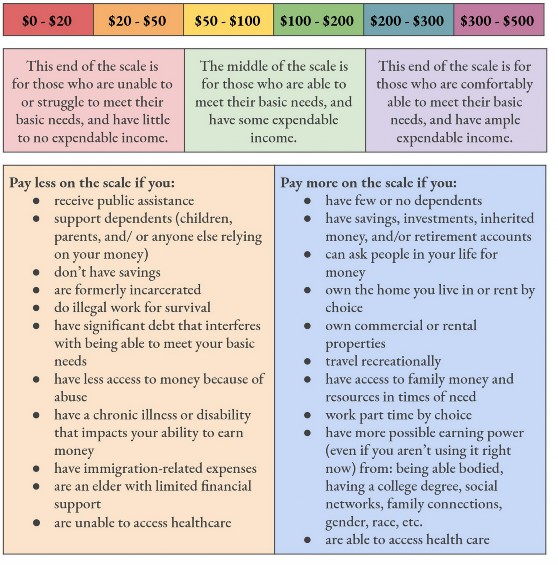
AWARE-LA’s resource on giving and wealth offers a powerful breakdown of how white people can use financial privilege to invest in equity. We encourage you to start there.
Reflection, Education, and Accountability

Reflecting on Wealth and Privilege
Before setting donation amounts, we can reflect honestly on our own privilege and capacity:
Questions to consider (adapted from SURJ):
-
Do I have savings, investments, inherited wealth, or property?
-
Do I have access to financial safety nets through family, friends, or institutions?
-
Do I have health care access and/or part-time work by choice?
-
Have I benefited from systemic privilege related to race, education, mobility, or social networks?
-
Can I comfortably travel recreationally?
-
What is my capacity to redistribute rather than accumulate?

Material support must go hand-in-hand with an ongoing investment in our own anti-racist education.
Ongoing Reflection Practices
-
Unlearn dominant norms by reflecting on the Characteristics of White Supremacy Culture by Tema Okun and others.
-
Reflect on each characteristic of white supremacy and how it has negatively permeated impacted your life and your artistry. Which ones feel most relevant to you? What antidotes, daily practices, affirmations, and actions can you put into place to counteract our socialization.
The following text is adapted from overcomingracism.org. These characteristics are intended as entry points or simple ways to begin noticing patterns of white supremacy culture, not full definitions. For a deeper analysis, please see this resource.
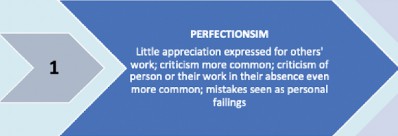
ANTIDOTES
Develop a culture of appreciation; develop a earning organization, where it's expected that everyone makes
mistakes and those mistakes offer opportunities for learning
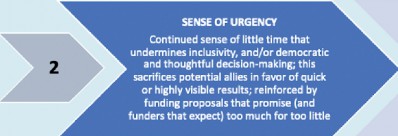
ANTIDOTES
Realistic workplans; leadership that unde stands that things take longer than anyone expects; discuss and plan for what it means to set goals of inclusivity and diversity, particularly in te·ms of time; write realistic funding proposals
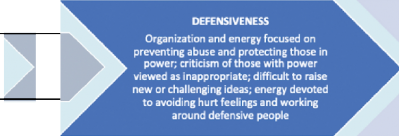
3
ANTIDOTES
Understand how defensivenessis linked to fear (of losing power, face, comfort, privilege); name defensiveness as a problem when it is one

4
ANTIDOTES
Include process goals in pla ning;
develo,pa values statement about how work will be done in the organi.zation;
develop methods for measuring process; recognize when you need to get off the agenda to address people's feelings and underlying concerns
5
ANTIDOTES
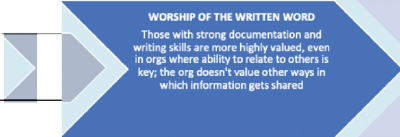
Analyze other ways people get and share information; come up with alternative ways to docume t what [s
happening; work to recognize the contributions and skills that every person brings to the organization; make sure anything written can be clearly understood (is jargon-free)
6
ANTIDOTES
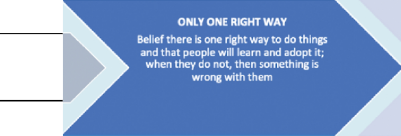
Accept that there are many ways to get to the same goal; notice and name behavior when folks/groups push "one right way": acknowledge you have a lot to learn from community partners.' way of doing; be willing to adapt; never
ass me you/the organi2.ation knows.
w at's best for others
7
ANTIDOTES
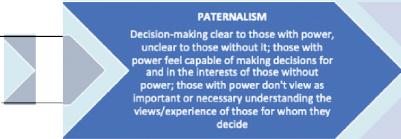
Ensure transparency about decision-making; include people affected by decisions in the process
8
ANTIDOTES
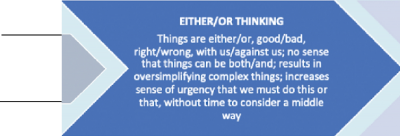
When people use 'either/or' language, push for more than two alternatives; when people simplify complex issues,
encourage deeper analysis; with urgent decisions, make sure people have time to think creatively
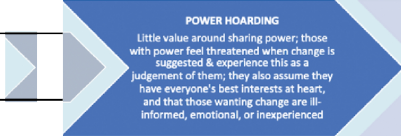
9
ANTIDOTES
Include power-s aring in your org's values statement; discussthat good leaders develop the power and skills of
others; understand that change is inevitable and that challenges to lea.de ship can be productive a d healthy
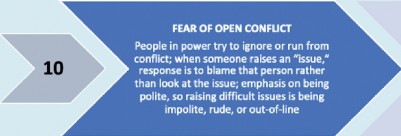
ANTIDOTES
Role play ways to handle conflict before it happens; distinguish between politeness and raising hard issues; once a conflict is resolved, reflect on how it was resolved and/or might have been handled differently
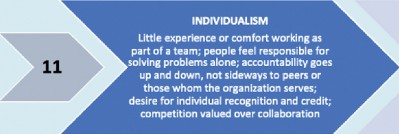
ANTIDOTES
Include teamwork in your o g values statement; make sure that credit is given to all those who participate in an
effort, not just the leaders; practice group (not individual) accountability; use meetings to solve problems, not just report act· ities
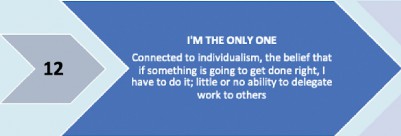
ANTIDOTES
Evaluate people based on their ability to delegate to others; evaluate people based on their ability to work as part of a team to accomplish shared goals
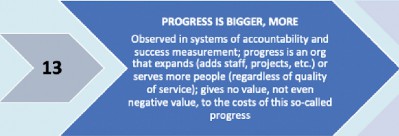
ANTIDOTES
Ask how actions today will affect people seven generations from now; ensure that any cost/benefit analysis includes a// costs, not Just financial ones; ask those you work with and for to evaluate your/org performance
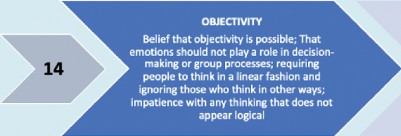
ANTIDOTES
Realize that everybody's perspective is shaped by their worldview; realize this means you, too; push yourself to sit with discomfort when people express themselves in ways unfamiliar to you; assume that everybody has a valid point and your job is to understand it
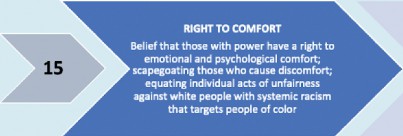
ANTIDOTES
Understand that discomfort is at the root of all growth and learning; don't take everythi g pe sonally

-
White women artists: Examine how our spaces and projects address (or fail to address) intersectionality.
-
Are we perpetuating white feminism?
-
Are we truly listening to people who have been marginalized, or are we unconsciously using our own experiences of struggle as a way to silence or minimize their voices?
-
Remember: empathy or shared personal struggle does not equal an understanding of systemic racial oppression.
-
-
Are we centering Black trans women and other marginalized voices?
-
Are the “inclusive” spaces we build majority white, cis, and straight?
-
-
Addressing busyness: Are we blaming the hustle of the music industry for sidelining anti-racist work?
-
We have time when we make time. Anti-racism must be integrated, not postponed.
-
Find ways to normalize and integrate learning and unlearning into your routine.
-
-
Community building:
-
Start book clubs or reflection groups within your teams or communities.
-
Schedule regular check-ins for mutual accountability.
-
Take anti-racism courses taught by Black educators.
-
Some Black educators teaching anti racist courses:
-
Shine Bright School - Monique Melton
-
The Great Unlearn - Rachel Cargle
-
Britt Hawthorne - antiracism workshops and anti-bias training for parents and educators
-
The Good Ally - Nova Reid
-
Calling In - Loretta Ross
-
Hella Social Impact - Lynn Johnson
-
TMR - Theresa M. Robinson
-
Rare Coaching and Consulting - Aiko Betha
Email antiracistmusician@gmail.com with additions to this list
-
-
-
Follow activist accounts:
-
Stay connected to the work, resources, and community every time you log onto social media
-
Is your feed helping you stay informed, inspired, and activated?
-
-
Different roles in activism:
-
Reflect on your “role in the movement” and how it can be woven into your career as a musician
-
For a detailed breakdown of each role, click HERE
-
Image credit: @buildingmovementproject
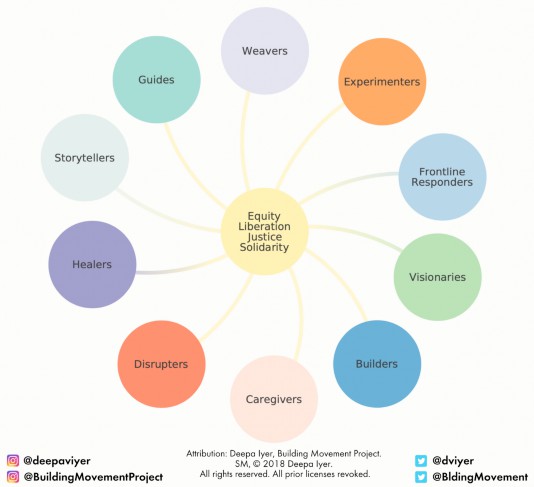

The Social Change Ecosystem framework was created by Deepa Iyer, Senior Director of Strategic Initiatives at Building Movement Project. Deepa first developed the map in 2017, and in 2022, she released Social Change Now: A Guide for Reflection and Connection, a workbook which provides a
deeper dive into the framework. You can find ways to purchase the workbook and to get involved at www.socialchangemap.com.
-
-
-
Weavers: I see the through-lines of connectivity between people, places, organizations, ideas, and movements.
-
Experimenters: I innovate, pioneer, and invent. I take risks and course-correct as needed.
-
Frontline Responders: I address community crises by marshaling and organizing resources, networks, and messages.
-
Visionaries: I imagine and generate our boldest possibilities, hopes and dreams, and remind us of our direction.
-
Builders: I develop, organize, and implement ideas, practices, people, and resources in service of a collective vision.
-
Caregivers: I nurture and nourish the people around me by creating and sustaining a community of care, joy, and connection.
-
Disruptors: I take uncomfortable and risky actions to shake up the status quo, to raise awareness, and to build power.
-
Healers: I recognize and tend to the generational and current traumas caused by oppressive systems, institutions, policies, and practices.
-
Storytellers: I craft and share our community stories, cultures, experiences, histories, and possibilities through art, music, media, and movement.
-
Guides: I teach, counsel, and advise, using my gifts of well-earned discernment and wisdom.
For Students and Emerging Artists
White music students entering the industry have a critical opportunity to start differently. Reflection questions to consider:
-
-
How did white privilege contribute to my access to music education, gigs, and career support?
-
Is my program predominantly white? Is my bandstand predominantly white?
-
Is there an accountable forum for Black students to voice their experiences?
-
Am I actively combating BIPOC erasure presently and in the history of my genre?
-
How can we hold our music institutions accountable for change?
-
Are your teachers educating you about the movements, culture, history, and activism, or are they only teaching about the music? Hold teachers accountable.
-
The movements aren’t just historical; they’re happening now - is this being discussed?
-
Am I learning about the full contributions of Black innovators in my music history classes?
-
Is the difference between appreciation and appropriation being discussed? Is white appropriation of Black music included in the music history being taught?
-
Are there safe spaces for Black students to communicate how the institution can do better, and accountability check-ins to make sure changes are being made?
-
If teachers are blocked from teaching these things, how can you create community among the student body to have these conversations and learn?
Tools for Students and Teachers
Reading Lists and Resource Guides
-
-
Anti-Racist Pedagogy in Music Education — UCSB Resource List
-
Black and Asian- American Feminist Reading List
Academic Articles
-
“Becoming an Anti-Racist Music Educator: Resisting Whiteness in Music Education” by Juliet Hess

Financial Contributions
Anti-racist action requires more than solidarity in word — it requires redistribution of resources, influence, and opportunity.
Below are ways we can materially support the work of Black musicians, organizers, and communities.
Ticket Contributions
-
Quietly build a small fundraising margin (e.g., $1–$2) into ticket prices.
-
Donate this additional amount directly to a local Black-led organization in each city you perform – without centering this action in your promotion.
Merch Revenue Sharing
-
Dedicate a percentage of merch proceeds to Black-led organizations or initiatives supporting racial justice.
Income Reinvestments
-
Commit to donating a recurring portion of your annual earnings to racial justice causes.
-
As your income grows, revisit and increase your giving.
Ongoing Support and Resources
-
Donate directly to organizations focused on the advancement and support of Black musicians and creatives.
-
Join mailing lists and stay connected to their work and needs.
Reparations Funds

Reflection: We are all artists navigating the music business, however what we experience as white artists is less challenging and less consequential. Reflect on how whiteness has brought you opportunities, advantages, and financial privilege. Reflect on how we can bring the concepts of spending our privilege into our business. Honestly assess where you are and where you want to be.
Support initiatives like Fund for Reparations Now, which direct resources toward Black communities with intentionality and transparency.
Addressing Consequences of Anti-Racist Work
* needs formatting and editing *
Challenging white supremacist systems comes with consequences. This has always been true in any field or space. It’s important that we go into this work aware of what we might lose and stay committed.
Our privilege is at play here too. Our whiteness means that our safety is never as much at risk, our consequences are lighter and shorter lived (if there are any at all), and the public support in the face of those consequences will be bigger.
Because we face fewer barriers, our responsibility to do the work is even greater. Our privilege puts us in a prime position to do the work with greater impact.
The level of negative consequence often corresponds with the whiteness and size of our audience. Those of us with predominantly Black audiences may face fewer consequences and may even gain support. Still, our motivation must come from genuine commitment, not possible advantages that may accompany the work. Doing the work for these gains is exploitative and performative. Our focus is always equity, not financial or social gains.
Things we may lose: Partnerships, sponsorships, label support, playlisting, fellowships, gigs, and personal relationships with family and friends who disagree.
Things we will gain: Community rooted in humanity and equity, and the partnerships, gigs, and personal relationships that come from it.
Teams - This is another reason why picking the right team members is so important. In moments of backlash or consequence, we need to have managers and support systems that will have our back, support the work, and work creatively with us on the shared vision - not people who encourage us to give in or give up because of the money. Often our teams are having conversations about our careers on our behalf, so making sure our team is on board with the work is crucial.
Keep editing this -
We may not be in a community that supports the work right now, but as we start to make and foster those connections, community will grow around us.
It’s scary to disagree with our community and to start seeking out and building a new one, but it’s worth it. Now that we’re awake to the realities of white supremacy, we can’t go back. And, a community that’s based in humanity, equity, empathy, mutual growth, and love, will always be a more beautiful, fruitful, fulfilling place to exist than one rooted in white supremacy and scarcity.
Finding and Building a New Community -
Depending on what your scene looks like - making these changes and doing this work may be alienating.
Calling white people into the work -
Organizations like SURJ have many amazing resources and guides:
-
Webinar: Calling In vs Calling Out
-
More Webinars HERE
Overview of SURJ toolkit:
-
Tap into your humanity - There was a point at which the guilt and shame that come along with recognizing how white supremacy plays a role in your life kept you from the work. Think back to that moment - What pulled you out of it? What allowed you to hear it this time?
-
The goal is to continue the conversation, not to be right or convince them in one “argument”
-
Showing up with curiosity and empathy
-
Not belittling people, presenting information and pivoting
-
Being a person that they can come to for another perspective - you’re probably the only person in their life with that information, so keeping the conversation going is crucial
-
If you do this, they will continue to come to you for perspective, ask questions, and slowly and gently, you can bring them into the work
-
-
It’s uncomfortable, frustrating, upsetting, and disappointing to have these conversations, but this is our work. We’re not the ones being harmed, and we’re in the best position to have these conversations with people.
-
We all have different roles in the movement based on our community and audience - bringing white people into the movement is important and comes with a unique playbook. We should all spend time with the resources above so we’re ready for these conversations.

Reaffirming Our Commitments:
-
We know that our whiteness gives us an advantage and a responsibility to do the work
-
We know that our financial privilege puts us in a position to take financial hits
-
We’re putting community and humanity at the center of our artistry and careers, not money and capitalism
-
We know that the cost of doing the right thing is always worth it…. Edit this
-
We know that being in the work and being in community will surround us with incredible, loving, passionate, supportive people.
-
-
As mentioned above, this gentle language around violent systems of white supremacy should only be used in white spaces to call white people into a movement that will ultimately teach them the realities they’re currently pushing away.

Final Notes and Invitation for Feedback
This document is a living resource.
We welcome your experiences, critiques, and ideas for growth.
Please send feedback, additions, or reflections to: antiracistmusician@gmail.com
🗂 DIRECTORIES AND RESOURCES OF BIPOC PROFESSIONALS
This list is a starting point.
There are many more Black and BIPOC creatives across every sector of the music and creative industries.
We encourage everyone to expand their networks intentionally — not by relying solely on a fixed list, but by continually seeking out new relationships, collaborations, and sources.
We welcome additional suggestions — if you know of resources, directories, or networks that should be included, please email: antiracistmusician@gmail.com.

📚 Large Directories
-

🎶 Music Creation Roles
Composers/Arrangers
-
Producers
-
Instrumentalists
-
Vocalists
-
Features (Guest Artists)
-

🎛 Technical and Production Roles
Lighting Engineers
-
Audio Engineers
-
Tour managers
-

🎨 Visual Arts and Design
Visual Artists and Graphic Designers
-
Animators and Animation Studios
-
Black N Animated (LinkedIn)
-
Black Girl Nerds: 5 Black Owned Animation Studios

🎥 Film and Video Production
Directors
-
Cinematographers
-
Editors
-
Production Teams
-

✨ Fashion and Styling
Stylists
-
Amerika B Style Me (The Stylist Network)
Fashion Designers
-
GQ: 50 Black-Owned Clothing Brands Shaping the Future of Menswear
-
Makeup Artists
-

🎟 Venues and Promoters
Venue Owners
-
Talent Buyers
-
Show Promoters
-
Festival Programmers
-

🚚 Business and Production Services
Merch Production Teams
-
Distributors
-
Rentals
-
Tour Logistics Companies
ANTI-RACIST TOOLKITS
White Anti-Racist Culture Building Toolkit The Culture Equity & Inclusion Initiative Americans for the Arts - Tools and Templates Creative Equity Toolkit (Australia)
PODCASTS
Pod Save the People - with DeRay
Weekly podcast where activist DeRay Mckesson and a panel of voices explore news, culture, politics, and social justice through analysis and conversations with leaders and changemakers.
Let’s Talk About Race - Kamran Rosen
This podcast is a reminder on the power of real conversation, with real humans, not for media soundbites. We are all much more similar than we are different and we'll never achieve unity through animosity.
Undistracted with Brittany Packnett Cunningham
UNDISTRACTED will serve as a weekly guide to the revolution as we all dig into everything from the latest headlines to deep-dive conversations with today’s most fascinating changemakers.
An audio series on how slavery has transformed America, connecting past and present through the oldest form of storytelling.
Know Better Do Better - Marie Beecham
It's hosted by Marie Beecham, a writer and speaker who has shared her fresh take on antiracism with millions. Her unique point of view will draw you in and send you off better equipped and inspired to make a difference.
Do the Work - Brandon Kyle Goodman
“Do the Work” is a podcast hosted by Brandon Kyle Goodman, about race and our personal relationships. Each episode is an intimate conversation between two people who know each other well — family, old friends, lovers or colleagues. We bring them together so they can finally have a real conversation about race, and we can all learn how to be anti-racist in our daily lives. We all have bias; let’s talk about it!
A podcast and reporting team that explores issues of race, identity, and culture in the United States. It dives into how these topics intersect with politics, history, and everyday life, unpacking systemic inequalities while highlighting personal stories and experiences. The show is known for making complex conversations about race accessible, engaging, and thought-provoking for a wide audience.
Higher Learning - Van Lathan and Rachel Lindsay
This podcast covers Black culture, politics and sports, and pop culture.
FURTHER LEARNING
Foundations of Racism and White Supremacy
What racism is, how white supremacy culture functions historically and today
🌐 Tema Okun: White Supremacy Culture (website toolkit)
📄 Tema Okun: White Supremacy Culture – Still Here (2021 Edition PDF)
📖 Stamped from the Beginning - Ibram X. Kendi
📖 White Fragility - Robin DiAngelo
Anti-Racist & Personal Growth
How to recognize privilege, unlearn racism, and develop anti-racist literacy and language
📖 Layla Saad: Me and White Supremacy
📖 How to Be an Antiracist - Ibram X. Kendi
📖 So You Want to Talk About Race - Ijeoma Oluo
Community Organizing & Collective Action
How to do anti-racist work with others - beyond personal reflection
🌐 Maurice Mitchell: Building Resilient Organizations
🌐 SURJ: From Scarcity to Solidarity Toolkit
🎥 Loretta Ross, “Calling In: A Better Way to Address Harm” (TED Talk)
Cultural Appropriation and Equity in the Arts
How racism and anti-Blackness appear in music, art, film, fashion, etc.
Historical Context and Critical Race Theory
Understanding systemic racism over time, legally, structurally
📖 The New Jim Crow - Michelle Alexander
📖 Between The World And Me - Ta- Nehesi Coates
📖 Racecraft - Barbara Fields and Karen Fields
📖 Critical Race Theory: An Introduction - Richard Delgado and Jean Stefancic
🎥 Loretta Ross: The Origin of the phrase "Women of Color"
Healing, Resilience and Joy in Black Communities
Amplify Black-centered healing, resistance, and cultural celebration
📖 Black Futures – Kimberly Drew and Jenna Wortham
📖 Sister Outsider - Audre Lorde
📖 Rest Is Resistance: A Manifesto - Tricia Hersey
Documentaries +Film
📖 I Am Not Your Negro by Raoul Peck
📖 Origin - Ava DuVernay (adaptation of Isabel Wilkerson’s Caste)